


Fortress Kyiv: Why Topography Still Matters in Real Estate
In 1037, Yaroslav the Wise chose the highest ground in Kyiv to build his gate. He didn’t do it for the view. He did it because anything approaching the city had to come uphill. That gate is still there — buried inside a museum that was built around its ruins. And the logic that put it there still prices real estate in the neighborhood today.
Why Location in Kyiv Is Not All Equal
Kyiv has an average elevation of around 100 meters (300 feet) above the level of the mighty Dnipro, but the lowest points in areas like Podil are just a couple of meters above the river. For this piece, let’s focus on the most popular central areas. As anyone familiar with our business knows, we’re famously “obsessed” with the Golden Gate area, followed closely by Lypky and the area around Shevchenko Park.
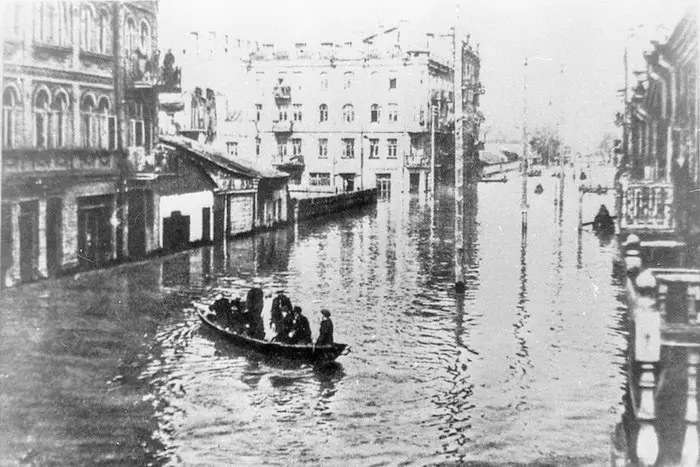
Don’t get me wrong, Podil has its charms, but when you’re only about 2 meters above the river level in places, it gives you pause. I still remember old photos of a man floating in a canoe down a flooded Podil street, which is not something you have to worry about on higher ground.
The Golden Gate Area: Where History and Real Estate Converge
Our focus on the Golden Gate area is as foundational to our business as it is to the city’s history. Surrounded on most sides by gently (and sometimes not-so-gently) sloping hills with sweeping views of the Dnipro, it’s an idyllic spot for worship, governance, and living. Following the collapse of the latest iteration of Russian imperial ambitions on Kyiv in the early 1990s, many embassies chose to locate here for many of the same historic and practical reasons. The UK embassy sits on one of the oldest streets in this ancient neighborhood, and the French, German, Japanese, and many others, are just a stone’s throw away.
This critical mass of embassies created what we might call “network effects.” Clustering together during the tumultuous post-USSR years generated demand for long-term housing and quality hotels. It’s no surprise that most of Kyiv’s 5-star hotels are within easy walking distance of Golden Gate, which, in turn, attracts business travelers and tourists — further reinforcing the area’s appeal. At the peak of the pre-global financial crisis boom (around 2007–2008), I heard stories of prime real estate in the area reaching $8,000–10,000 per m² — prices that rivaled parts of Paris or London at the time. Of course, that bubble eventually burst.

What Every Market Crisis Reveals
The 2014 war and the economic crisis that followed taught me two things I hadn’t found in any market.
- Proximity to embassies doesn’t just attract diplomat tenants — it gives people a visceral sense of physical security. Not rational. Visceral. At one point in 2022, tenants refused to view apartments just 100 meters farther from an embassy. It felt “too far” for them.
- Every market disruption triggers a rush to quality. Tenants who’d been tolerating a mediocre apartment for years suddenly had options — and they took them. Fresher apartments for the same prices they were paying for older units with lower quality renovations. Landlords who’d skipped renovation found out the hard way.
This is a reminder not only for landlords planning new renovations, but also for those with 10–20-year-old refurbishments who think they can skip capex forever.

My own Kyiv real estate journey began in 2012, when I moved from Moscow after a short, unhappy stint at an investment bank. From then on, I went all-in on Kyiv, with real estate as my sole focus. However, at the beginning, I wasn’t as laser-focused on Golden Gate as I am today.
With only decent Russian and zero Ukrainian language, I took on almost any client anywhere in the city to gain experience and earn money. It was a great way to learn the ropes, but it never felt sustainable, as too much depended on luck, with agents scrambling to show the same few mediocre apartments to the same clients.
The 2014 Crisis as a Test Case
The 2014 war was the perfect time to leave my employer and launch my own business. Witnessing the ensuing market dynamics up close pushed me to become extremely focused on the Golden Gate area. The crisis triggered a mass exodus of expats, especially long-term residents who either felt uneasy with the new security situation or couldn’t sustain their livelihoods during the prolonged downturn. This hit the rental market hard in expat-friendly neighborhoods, and landlords who once refused to pay agents suddenly had no choice, as there were far more vacant apartments than tenants.
Yaroslav the Wise built on the highest ground in Kyiv. Any other spot was too easy to attack. A thousand years later, people still look for that hill. They want to be near the decision centers and the embassies. These places signal safety.
Topography doesn’t change. Neither does the need for it.
If you’re looking to navigate the Kyiv real estate market with a team that understands both historical logic and modern crisis management, we’re here to help.


