
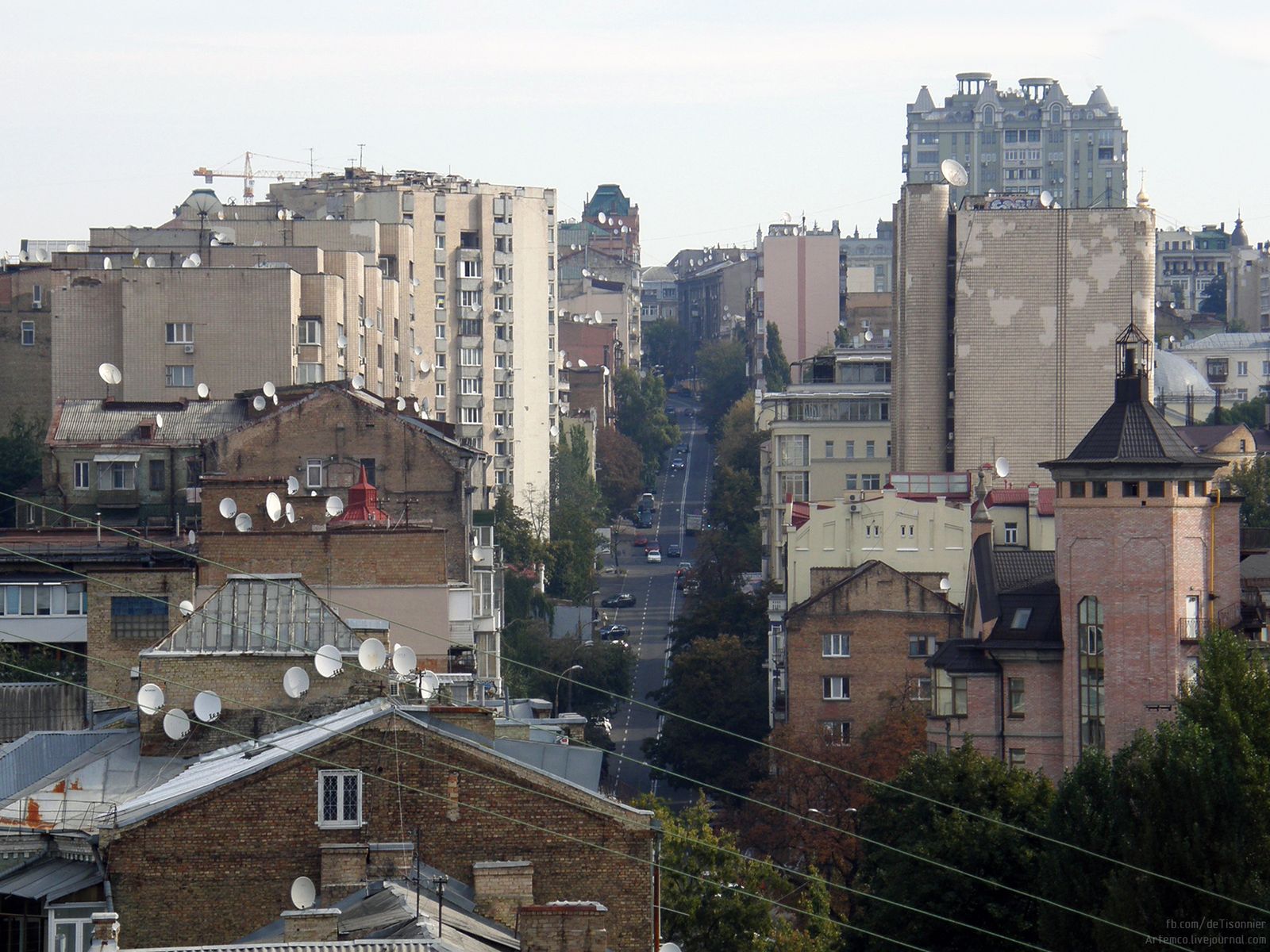
Kyiv · Historic Centre
Olesia Honchara
History
Olesia Honchara Street was first mapped in 1834-1836 as Volodymyrska Street, crossing an old refuse ravine that slowed its development into the 1870s. Renamed repeatedly through political change — Mala Volodymyrska, then Stolypinska (1911-19) after the prime minister who died at No. 33, then Hershuni, Lado Ketskhoveli, Chkalova from 1939 — it took its current name honouring writer Oles Honchar only in 1996. The surviving fabric took shape at the turn of the 20th century, when architects P. Alyoshyn, O. Kobelev, H. Ledokhovskyi and V. Nikolaiev built four-to-six-storey income houses. House No. 33, the former Kachkovsky clinic by Ledokhovskyi, is one of Kyiv's finest Art Nouveau buildings. House No. 60, the neo-Gothic “Doctor's Castle” built 1908-09 for professor Mykhailo Lapinsky, stood over 30 metres tall — Kyiv's tallest residential building until 1912. The street sits in Saint Sophia Cathedral's UNESCO buffer zone, which in 2019 stopped an illegal high-rise project after an eleven-year campaign.
Character
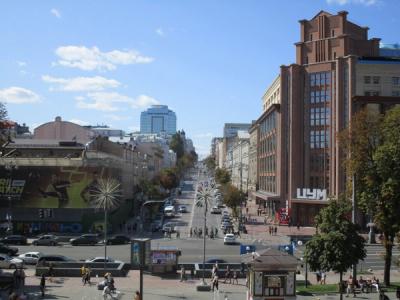
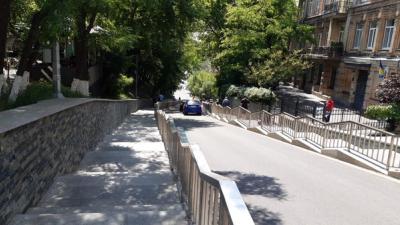
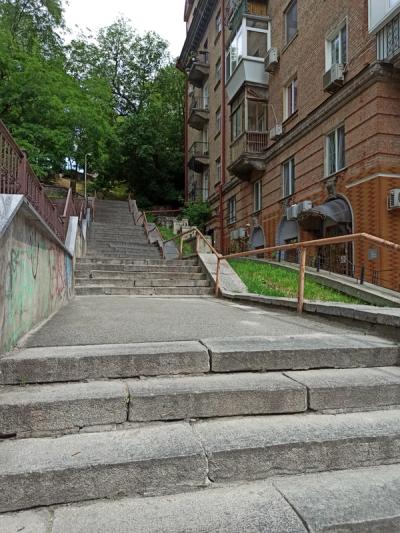
Olesia Honchara climbs gently from Velyka Zhytomyrska before turning into a steep downhill uzviz toward lower Old Kyiv, widening into small squares near Bohdana Khmelnytskoho and Mykhaila Kotsiubynskoho that break up the street wall with trees and lawns. Sitting just behind the Golden Gate-Yaroslaviv Val promenade, it feels more residential and less touristic than that busier corridor, while sharing in the same wave of creative businesses moving into Old Kyiv. Cafes — Turka na Honchara at No. 74, HANH Cafe & Market at No. 30A, the newer 8/5 cafe — bring steady daytime foot traffic; P2B Bar at No. 38A adds a graffiti-driven, DJ-set evening scene without turning the whole street into a nightlife strip. Two murals (Alexander Grebenyuk at 24A, Sebastián Velasco at 36A) add an open-air-gallery layer. Rental listings describe apartments here as “atmospheric” historic-centre flats, 80-150 sqm, often with views over rooftops rather than into neighbouring facades — a mid- to upper-income, culturally inclined street rather than a purely touristic one.
Landmarks
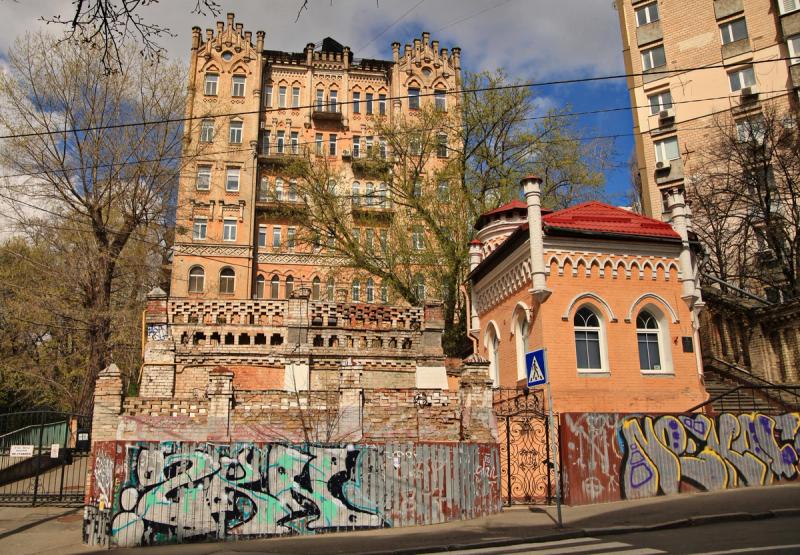
No. 60
Doctor's Castle
A neo-Gothic income house built 1908-09 for professor Mykhailo Lapinsky, its tower-like volume rising over 30 metres — Kyiv's tallest residential building until 1912.
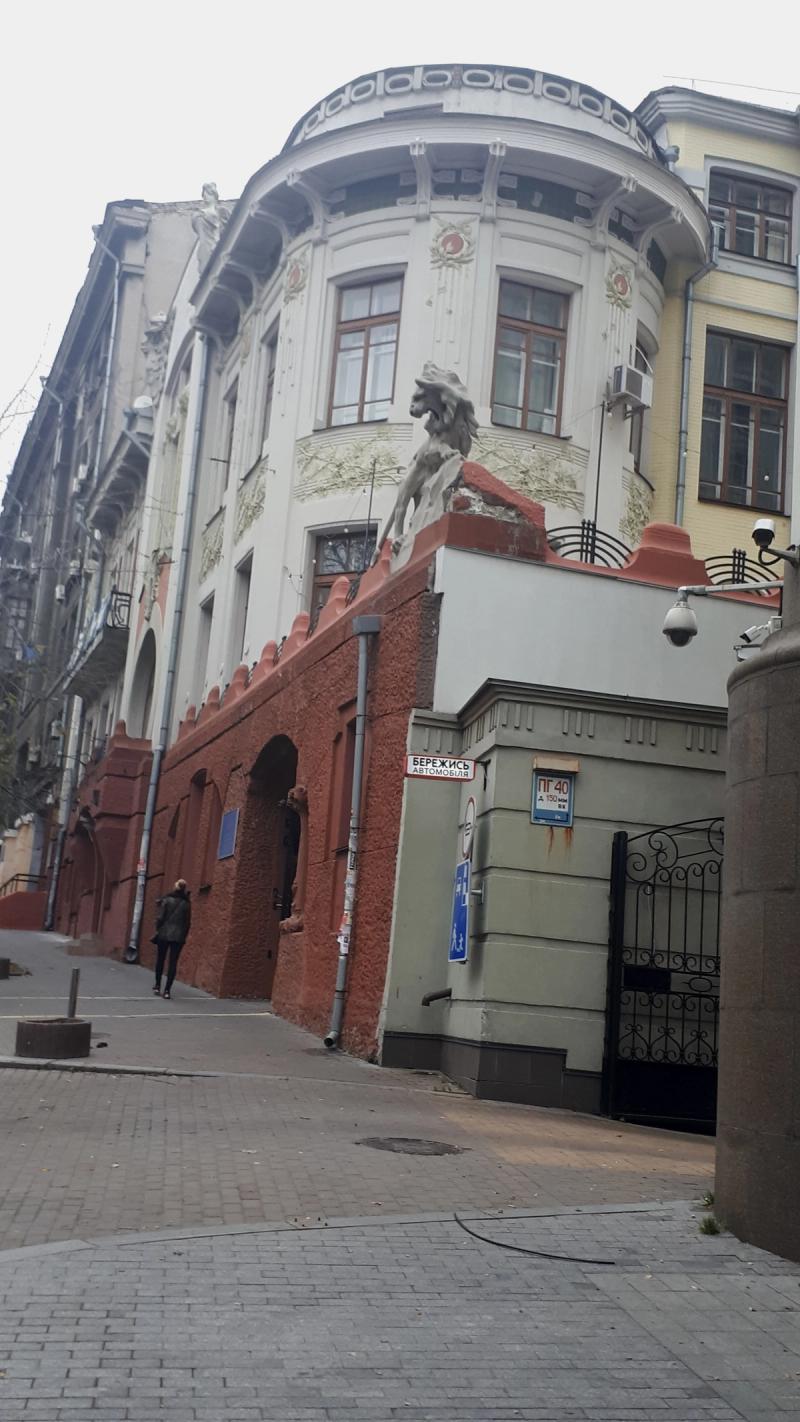
No. 33
Kachkovsky Clinic and Mansion
An early-20th-century mansion by architect H. Ledokhovskyi with rich sculptural decoration, one of Kyiv's finest Art Nouveau buildings. Prime Minister Pyotr Stolypin died here in 1911; now home to the Sixtiers Museum.
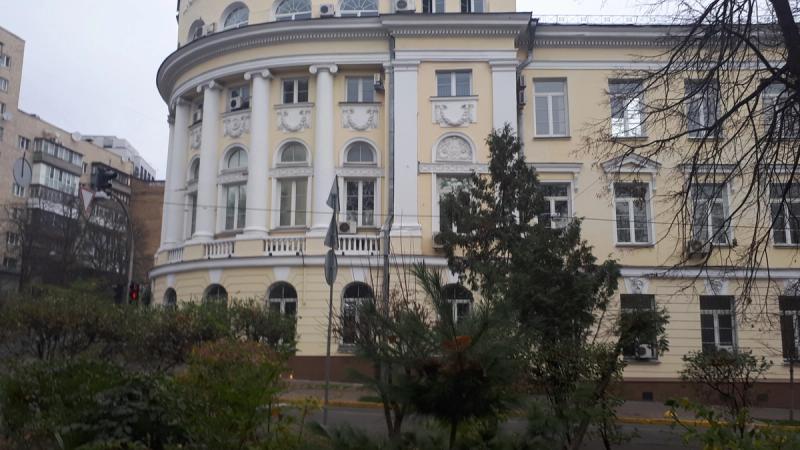
No. 55-A / 55-B
Former Women's Higher Courses and Russian Technical Society Ensemble
Two neoclassical buildings from 1911-1913 by architect O. Kobelev, today housing institutes of the National Academy of Sciences.
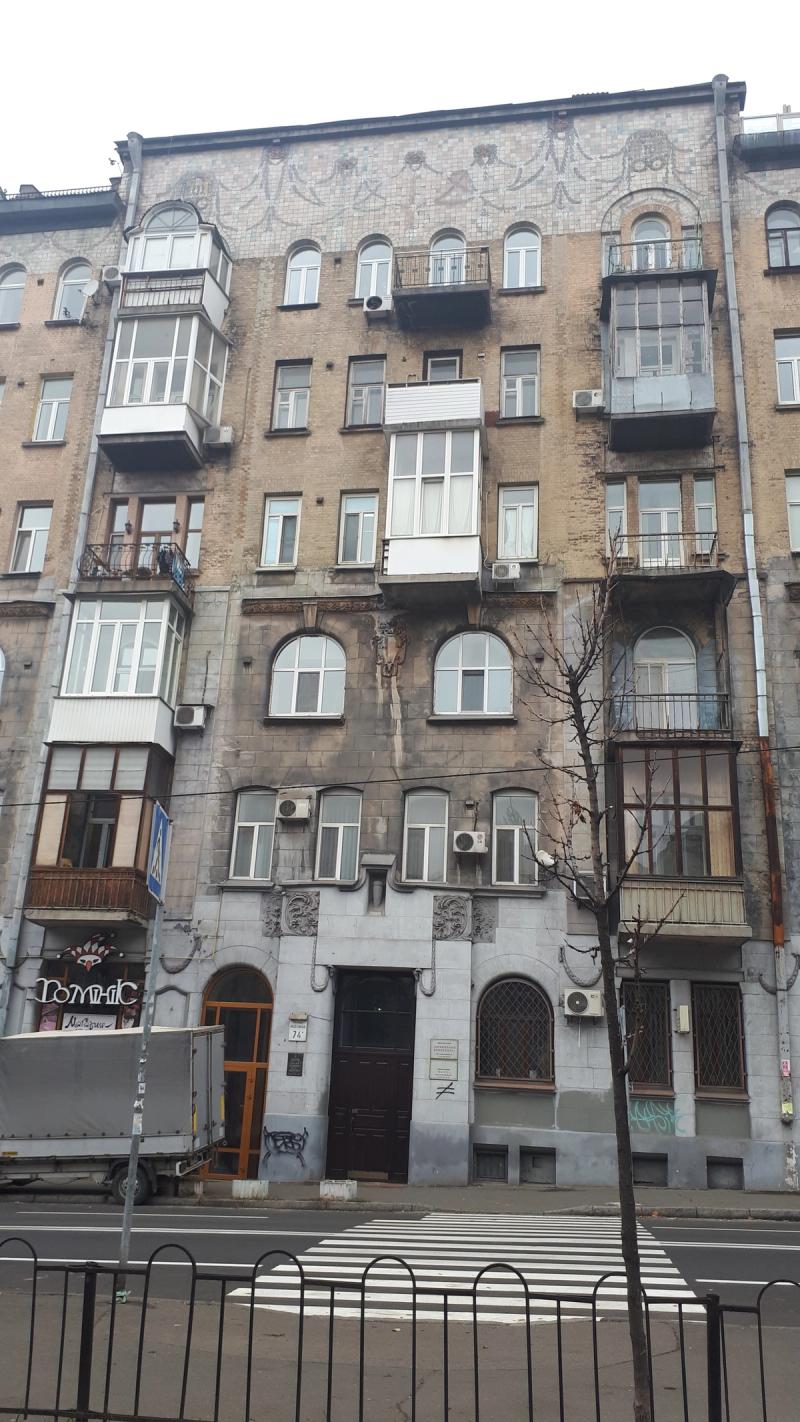
No. 74 / 74-A
Residential House by Pavlo Alyoshyn
An Art Nouveau apartment building from 1909-1910, now also home to Turka na Honchara — architectural heritage doubling as a neighbourhood cafe.
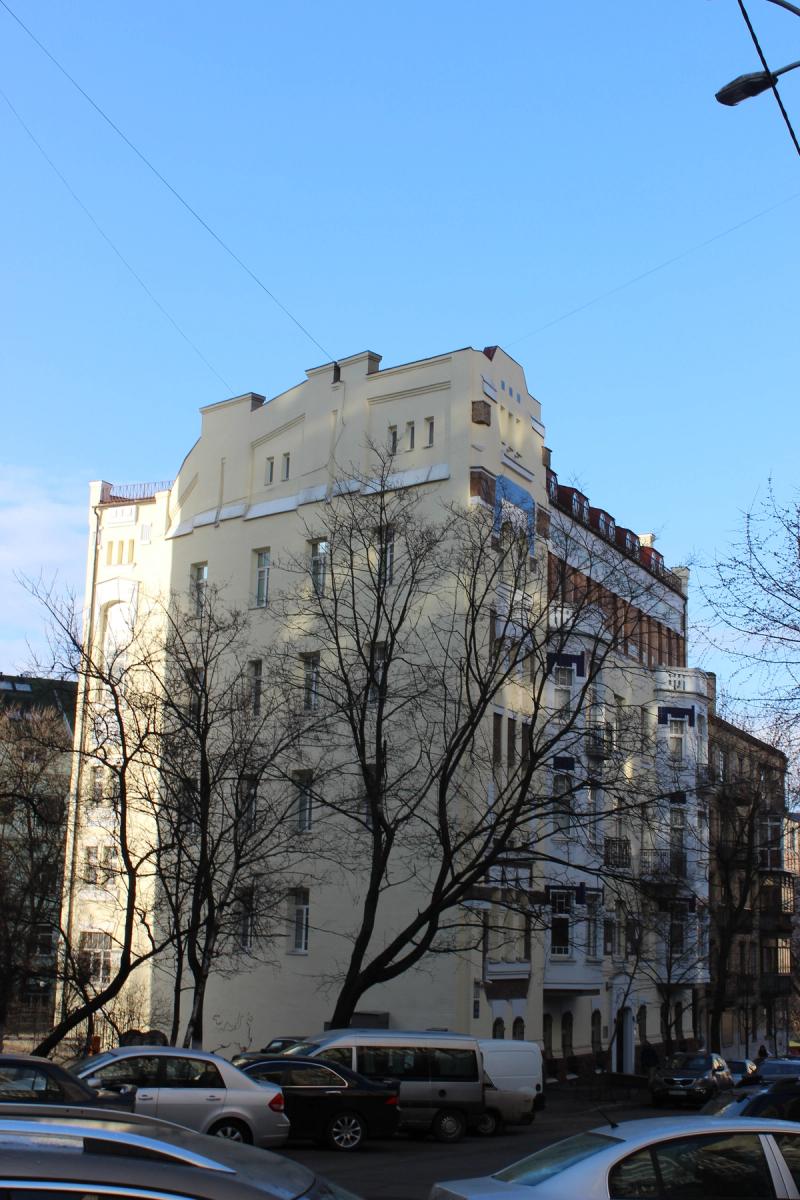
No. 65
Former Kyiv Teachers' Institute Building
A 1910-1911 residential building that historically housed the Kyiv Teachers' Institute, one of the academic anchors of the street's early identity.
Sights & Places
Cafes
- Turka na Honchara
- HANH Cafe & Market
- 8/5 cafe
Restaurants
- HANH Cafe & Market
Bars
- P2B Bar
Theaters
- Ukrainian Small Dramatic Theatre
- Malyi Teatr
Museums
- Sixtiers Museum
Parks
- Oles Honchar Square
Shops
- Silpo
Properties
Available on Olesia Honchara
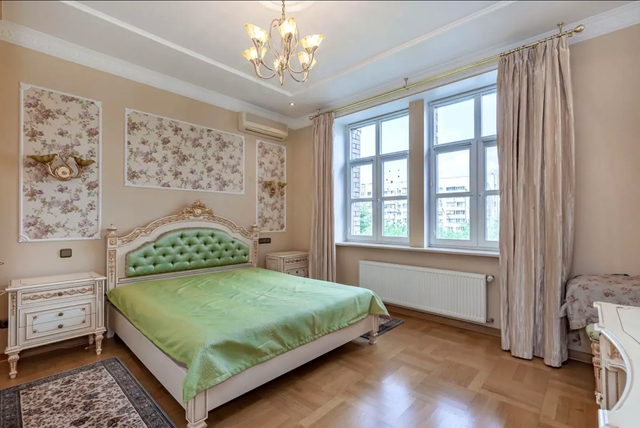
OLESIA HONCHARA ST., 26
166 sq.m · Fl. 5/9 · 4 Bdr
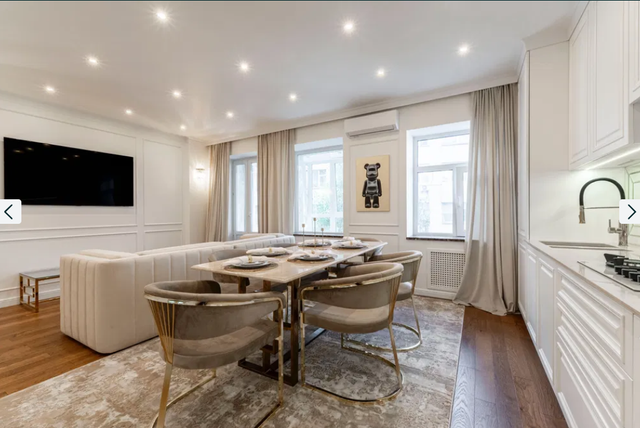
OLESIA HONCHARA ST., 8/5
88 sq.m · Fl. 4/4 · 3 Bdr
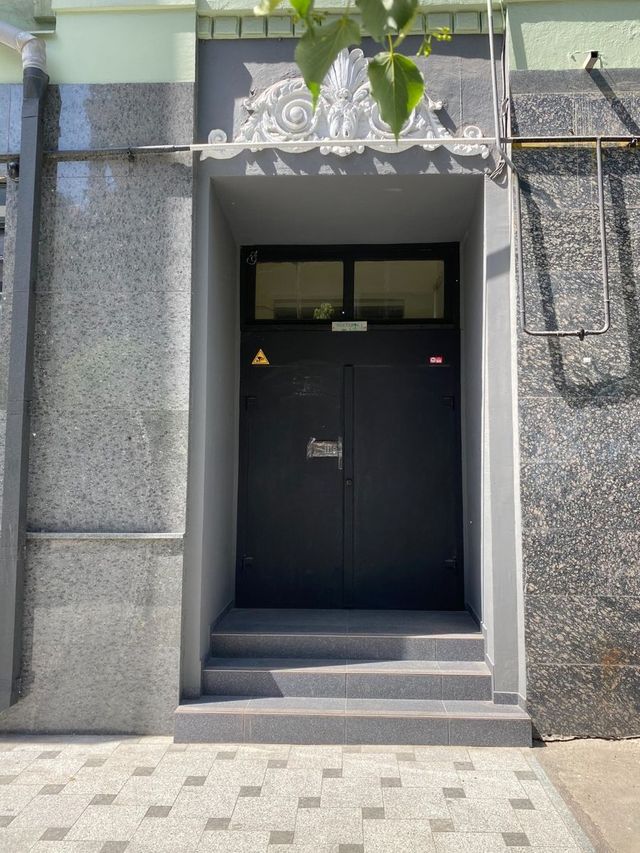
OLESIA HONCHARA ST., 88b
80 sq.m · Fl. 2/6 · 1 Bdr
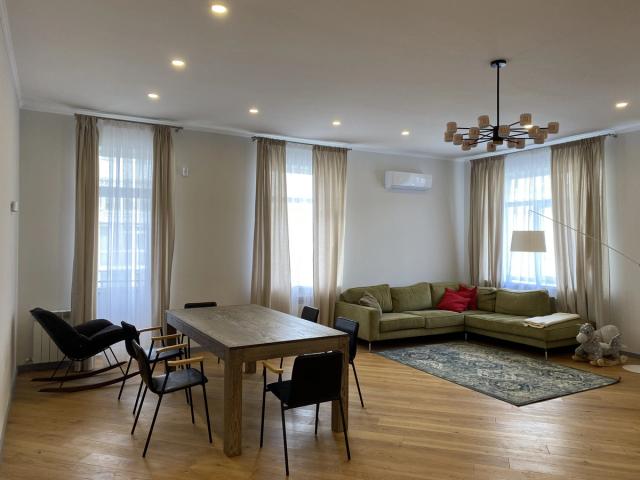 Rented
 OLESIA HONCHARA ST.,47b
165 sq.m · Fl. 6/7 · 3 Bdr
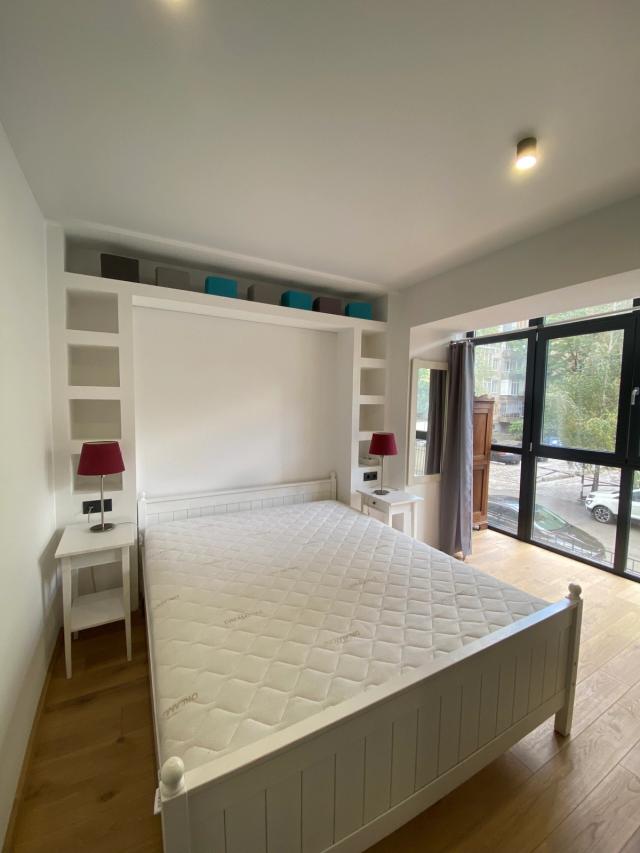 Rented
 OLESIA HONCHARA ST.,51
63 sq.m · Fl. 2/9 · 2 Bdr
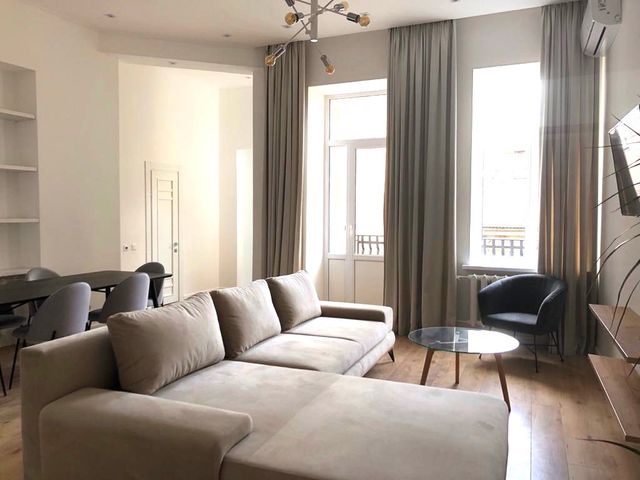 Rented
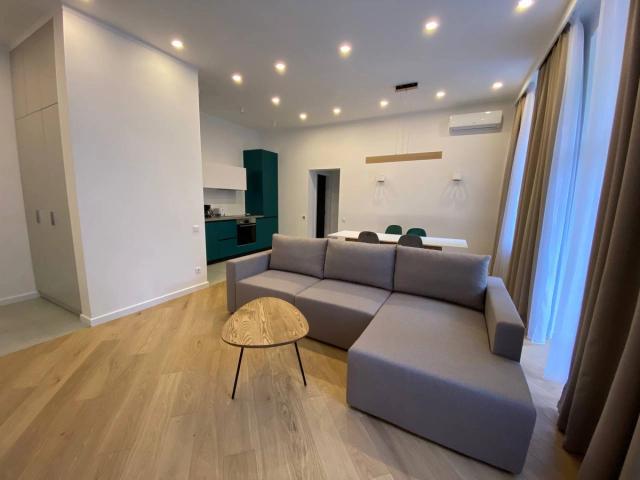
 OLESIA HONCHARA ST., 32A
98 sq.m · Fl. 6/7 · 2 Bdr
 Rented
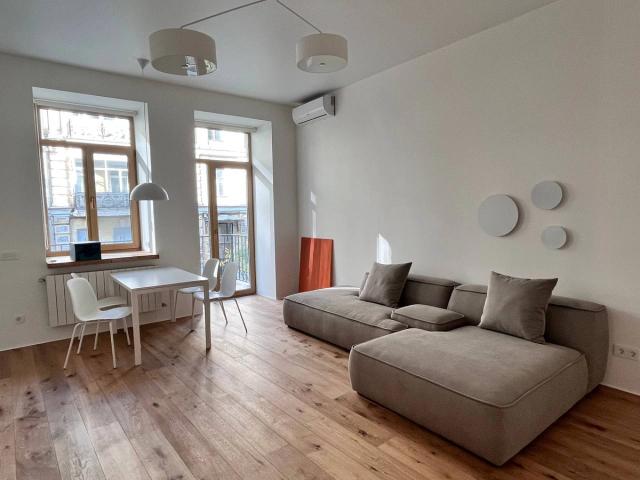
 OLESIA HONCHARA ST.,24B
59 sq.m · Fl. 2/6 · 1 Bdr
 Rented
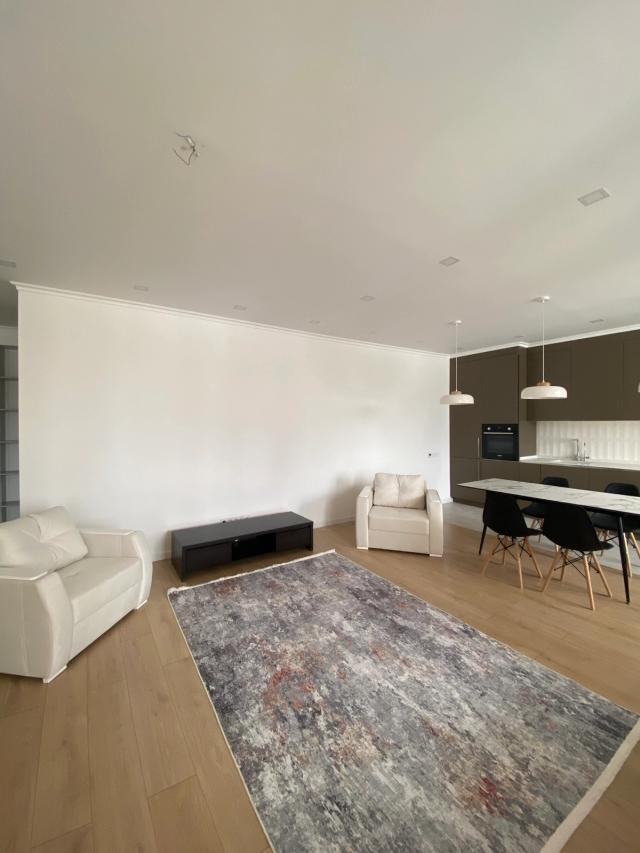
 OLESIA HONCHARA ST.,77
60 sq.m · Fl. 2/5 · 1 Bdr
 Rented
 HONCHARA ST., 30A
146 sq.m · Fl. 7/7 · 4 Bdr
Why invest here
Olesia Honchara sits inside Saint Sophia Cathedral's UNESCO buffer zone, which has kept most of its pre-revolutionary building stock intact and blocked large new towers — the “Fresco Sofia” high-rise project was banned by the Supreme Court in 2019 after an eleven-year fight. That scarcity, combined with genuine landmark architecture (the Doctor's Castle, the Kachkovsky mansion, the Alyoshyn Art Nouveau building), makes existing stock hard to replace. Cultural institutions sit directly on the street — the Sixtiers Museum and two small theatres at No. 33-A, research institutes of the National Academy of Sciences at 55-A/B — anchoring an academic and intellectual milieu rather than a purely residential one. One block over, Yaroslaviv Val hosts the embassies of Poland, Canada, Slovakia and the Czech Republic, and Taras Shevchenko National University's main campus is a short walk from the top of the street, drawing academics, NGO staff and diplomatic-adjacent professionals. Typical tenants are mid- to upper-income professionals — IT, creative industries, academics — plus some expats, drawn by sizeable 80-150 sqm apartments and a “living in Old Kyiv” character rather than a hotel-district feel.
Related Streets
From the blog
Reading on Olesia Honchara.
Blog
Relocation to Kyiv: A Short Guide
What could be better in the world than traveling? Put your life in a small suitcase, grab your favorite gadgets and go on a long voyage, like a glorious uncle…
April 2021
Read more →
Blog
Adventures of pets in Kyiv
Our life is a continuous mosaic of feelings, people, events, dreams, and experiences. They all form a chaotic picture of our path. How important it is that…
June 2021
Read more →
Blog
The Art of Food in Kyiv
When I hear the word “Kyiv,” my soul immediately becomes warm. My imagination paints a lot of amazing photos of memories that have been collected over the…
December 2021
Read more →Interested in a property on this street?
We know which buildings on this street are worth owning, and which aren't. Tell us what you're looking for.
Get in touch